Pastor Search Committee Thoughts

The author has served on five Pastor Search Committees in a Baptist church. These thoughts simply show things which worked in the specific congregation and are not necessarily applicable to your specific situation.

Without a doubt, serving on a Pastor Search Committee, when done right, is one of the most profound experiences in any Christian’s life. It is a time when you will draw closer to God, become more dependent upon the Holy Spirit, and grow exponentially in your faith and relationship with Jesus.

I had several notebooks from prior searches which I stored for many years, but I couldn’t find them when asked to share our experiences with another church. I don’t know if this was providential or unfortunate, but I will assume providential. Since I couldn’t find the notebooks, I tried to recall past searches and attempted to document things done well, pitfalls to avoid, and other random suggestions.

We relied upon the next verse as we conducted our searches:

“Now to him who is able to do immeasurably more than allow ask or imagine, according to his power that is at work within us, to him be glory in the church and in Christ Jesus throughout all generations, forever and ever! Amen.” – Ephesians 3:20-21

The Pastor Search Committee – In my experience, nothing is more important at this point than the careful and prayerful choice of those individuals who will serve on the Committee.

Our best committee had spirit-led individuals with diverse backgrounds including gender, age, time at the church, and skillset.

Our best committee was comprised of church members who loved and supported the pastors and had a good reputation in the church and in the community.

Our best committee had members who could work within a team, had good listening skills, were able to communicate their thoughts, who stayed within the boundaries set by the committee, and were patient and discrete.

We successfully avoided strong-willed individuals who acted independently of the committee and the pastors and the carnally-minded individuals who had the attitude that “I’ve got to hire a preacher”.

We had one or two pastors attend all meetings with the committee as non-voting members.

The Interim Pastor – Careful and prayerful choice of the Interim Pastor is the next most important step in the process.

Our best experience was to recruit a seasoned pastor who was not willing to be considered as a candidate to fill the open position.

In the situation in which we used a potential candidate as the interim pastor, we soon discovered that we had to decide whether to call the interim as pastor before considering any of the other candidates. We ultimately decided to call the interim.

In another situation where the interim pastor was adamant that they would not be willing to be considered for the full-time position, the committee still felt tremendous pressure from the church to call the interim pastor.

The Committee’s First Steps – In our best experience, the committee followed these steps:

The Committee selected individuals to serve as chair, vice-chair, secretary, and assistant secretary. The chair of the committee is a crucial role. It is helpful to have someone with strong leadership skills, but humble enough to depend upon the collective wisdom of the committee members. We also agreed upon regular meeting times and places.

We reviewed the Biblical qualifications of a pastor found in 1 Timothy and Titus. It has been valuable to have the committee read from various translations and ask “what does this mean to you?” to check for understanding and to build consensus.

We reviewed the principles in “Leading Change” by John Kotter with particular emphasis on the key steps and pitfalls to avoid.

We spent time as a group to pray individually for wisdom, discernment, and courage to meet the task assigned to us. In one search, we were in the vacant parsonage and each individual found a room, or corner of a room, to pray aloud to God and then reassembled for discussion.

We shared our hearts about the characteristics of individual we wanted as pastor. For example, a heart like David, the faith of Abraham, humble, kind, gentle, courageous. We successfully avoid the pitfalls of arbitrary qualifications such s “in his 40’s”, “been a lead pastor for at least five years”, “wife, two kids, one dog, no cats”.

We thought deeply about the culture of our church and discussed openingly. For example, what worship style does our church embrace – hymns, praise music, blended? What preaching style? What versions of the scripture do we use? What types of children’s and youth ministries do we use and embrace? We found that some candidates were excellent pastors, but are not the best fit with the culture of our church or the direction we believed God was leading our church.

We repeatedly emphasized the importance of being DISCRETE! The church wants to know how the search is proceeding and they have every right to know AT THE APPROPRIATE TIME. But, sharing too much information too early can be devastating to the committee, to the church, and to the candidate and their family.

The Committee’s Process to Find a Single Candidate – The best committee was very democratic in considering which candidate to pursue.

Our church has historically used a process to consider ONE candidate at at time. In our view, considering more than one candidate at a time has two pitfalls: (1) many top candidates will withdraw from consideration if they are in a “horse race” with another candidate and (2) voting between two candidates has the potential of splitting the congregation.

We kept all candidates on our list regardless of whether they submitted a resume, were nominated by a church members, suggested by a pastor, etc.

We used “Pareto Voting” to decide which candidate to pursue first. To clarify, each committee member independently voted for 20% of the active candidates on the list. For example, if you had 15 active candidates, each committee member would list three (20% of 15) candidates that they would like to consider further. The votes were compiled and remarkably one to three candidates would rise to the top for more detailed consideration.

Pareto voting was effective in reining in those who might be tempted to act independently of the committee and those who “knew” who God wanted to be our next pastor.  It also provided “cover” for the committee when someone couldn’t understand why their “brother-in-law” wasn’t being contacted.

The committee would then review the one to three candidates in detail, learn all we could about them without being disruptive to their current ministry, and discuss a length in committee. At this point, each member would rank the candidates in order. If three candidates, the top candidate for each committee member would get 3 points, second place would get 2 point, and last place would get 1 point. The points were totaled and the committee would vote whether to pursue the candidate receiving the most points.

At this point, one or two of the committee members would call the candidate, share that the Pastor Search Committee felt that God was leading us to consider them as our next pastor and ask them to prayerfully consider whether they would be willing be considered.

In our best situations, we had the prospective candidate and their spouse visited covertly. In each situation, we had a truthful, but not complete, explanation for them visiting. A prepared reason for their visit was important because, despite the committee and pastors’ best efforts, invariably a church member would encounter the candidate during the visit. In this visit, the committee expanded those meeting the candidate to include key lay leaders in the church with an emphasis on the importance of keeping this information confidential and being very discrete. For the expanded meetings, we chose to meet offsite to limit the number of people who might become aware of the meeting.

After visiting, if the candidate and spouse were willing to continue to purse the process, the committee made a recommendation to the church that we invite the candidate to come in view of a call (or in consideration of becoming our next lead pastor). A one-pager with Frequently Asked Questions and Answers was prepared and distributed to the church. The committee also hosted a question and answer session with any member who would like to attend on Wednesday evening before voting on Sunday.

After the church voted to call the candidate, we had the candidate and family come for a full weekend with multiple opportunities to interact with the candidate on Saturday and again on Sunday. The candidate preached in both services on Sunday, took a short break for lunch, then reassembled for Q&A prior to voting whether to call.

My Experience – Serving on a Pastor Search Committee is a humbling experience.  Here the stages that I generally follow:

Euphoria (and pride) – “Wow, what a privilege to serve on this Committee.  I know God is going to lead us to the greatest pastor ever!  After all, every minister would like to be pastor of our church!  The church is going to be so impressed by our work!”

Reality – “There really aren’t that many viable candidates out there.  The ones we want are serving in churches that would be a lateral move to our church.  The ones that seem to want to be our pastor are not really what God has laid on our heart.”

Rejection – “We have been turned down repeatedly by ‘good’ candidates and our list is getting thin.  The church is anxious to hear someone, maybe anyone.”

Desperation – “No one wants to pastor our church.  God, I am really desperate here.  If you don’t act, this is not going to happen.  Apart from you, we can do nothing!”  [At this point, God has a Committee that He can use to advance the kingdom.]

The Tension – there is, in the words of Andy Stanley, a “tension to manage” as opposed to a “problem to solve”.  The tension is between the pastors who lead the church and know the other pastors and wives and the committee members who can provide valuable insight.

Pastor’s Wife – We had only one expectation; the pastor’s wife should serve as they felt lead by the Holy Spirit, but shouldn’t feel pressure to serve simply because they are the pastor’s wife.  We were careful to avoid thought processes like “he would be a great pastor and his wife is an accomplished pianist [fill in whatever blank the candidate wife displays].

God bless you and your committee as you seek his will. 

“Keep on asking, and you will receive what you ask for.  Keep on seeking, and you will find.  Keep on knocking, and the door will be opened to you.  For everyone asks, receives.  Everyone who seeks, finds.  And to everyone who knocks, the door will be opened.”  – Matthew 7:7-8 

Closing Thoughts – I find the scriptures to be incredibly practical. I leave you with two thoughts:

Isaiah said, “In the year King Uzziah died, I saw the Lord”.  King Uzziah meant everything to Isaiah; and yet, in the year he died, Isaiah saw the Lord.  My question to this group is very simple:  In the year your pastor resigned, what did you see?  Are you going to be depressed, be in despair, or are you going to see the Lord and his hand even in this situation?

In the Book of the Acts, Luke wrote the following, “For David, after he had served his generation by the will of God, fell asleep, was buried with his fathers”.  I once told a Mission Group that ‘if clocks and calendars ran backwards, some individuals would be the perfect choice’ because they are always looking backwards and trying to relive the past.  But God has called us to serve THIS generation.  The second question is also very simple: What generation are you trying to serve?  Are you looking back to the generation when your church first started, or when it reach its zenith, or when your most recent pastor first stepped into the leadership role, or are you looking to serve THIS generation?

“The Lord bless you and keep you; [and] make his face to shine upon you, and be gracious to you, . . .and give you peace” is my prayer.
Sharp Dressed Man!

“Clean shirt, new shoes

And I don’t know where I’m goin’ to

Silk suit, black tie (black tie)

I don’t need a reason why”  – ZZ Top

In the words of ZZ Top, “every girl crazy ‘bout a sharp dressed man”.  Some men simply know how to dress and how to carry themselves to maximize the effect.  Cary Grant, Sidney Poitier, and Steve McQueen are among the stars who epitomized masculine elegance, wore a suit like they were born in it, and set the standard for classic chic.

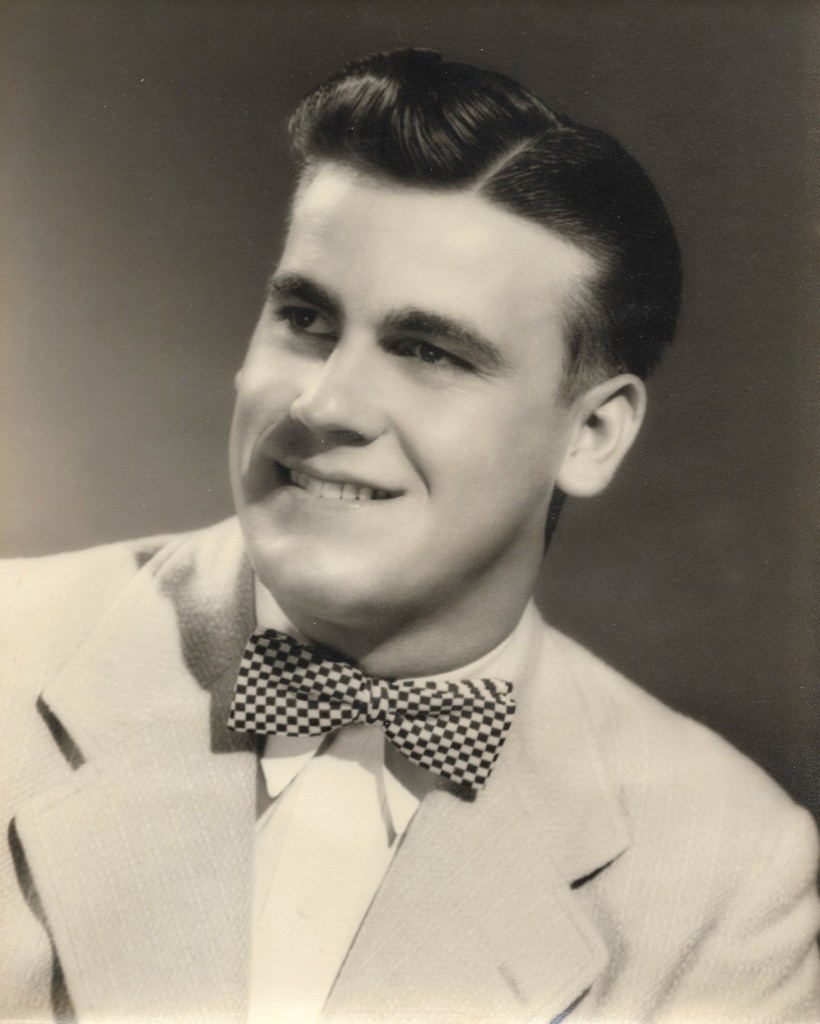
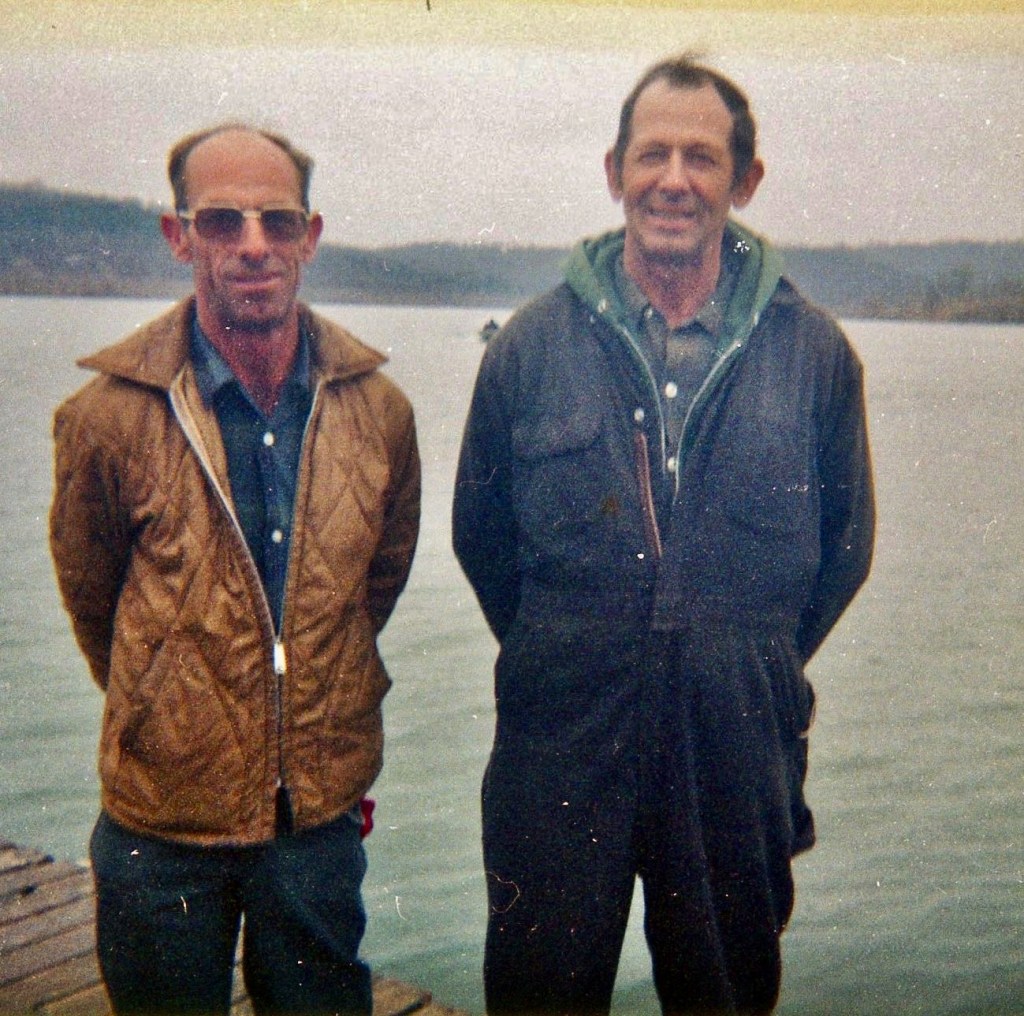
Over the years, I’ve met a few men who seemed to have this knack.  In particular, I recall two – both were pastors; both had an eye for detail; both had “perfect pitch” when it came to matching colors; both could pull it together, and both could wear it well.  One of these men was Pastor Jay Pollan from the Texas Piney Woods town of Hughes Spring and the other was my father-in-law C Bill Voss.

When I first met Bill Voss, I had just started dating his youngest daughter whom I adored.  Not wanting to misstep, I asked her if there were any unspoken “rules” around the Voss house.  I still recall her quickly replying, “Don’t mess up my Daddy’s hair!”  I thought it was an odd “rule” until I met Bro. Voss.  His hair was jet black in a slicked-back pompadour without a single hair out of place.  In the day, he could be, and likely was, mistaken from time to time for the Country singer Conway Twitty.  I soon discovered his dress was equally precise.  His suits were tailored to perfection, his shirts were stiffly starched, and his tie and handkerchief in the chest pocket caused the suit to pop!  He always had his shoes polished to a mirror finish and hidden beneath the cuffed pants were some CrAzY socks!  I thought to myself, I can learn a lot from this man from a spiritual and a fashion standpoint.

On one occasion, we went to the local mall on a family outing.  Bro. Voss said he wanted to step into a menswear store and look around.  He quickly spotted a smartly tailored suit in his size on the discount rack.  Not wanting to miss out on this bargain, he began to put together an entire outfit – suit, shirt, and tie.  He had found a perfect shirt to match the suit when the store manager had joined us.  With the suit and shirt lying beside a display of silk ties arranged across all the color palettes, the manager began trying a number of ties in the general color scheme as the suit, but nothing really sparked.  After a bit, Bro. Voss reached nearly to the other end of the display and selected a contrasting, but complimentary, colored tie.  When he placed the tie on the suit and shirt, it popped!  “What do you think about this combination?” he asked the store manager.  To which, the store manager replied, “Would you like a job?”  Bro. Voss chuckled and told him he had enough irons in the fire and didn’t need another job.

Years later, I began to recognize that his daughter had the same eye for color and detail as her Daddy.  When we built our retirement home, I drove her to the store to select paint, carpet, tile, and flooring colors and textures.  She met the store designer and politely told me that she “could handle it from there”.  I wisely left the selections to her and the designer.  When the house was completed, we had an Open House for friends and neighbors.  One person asked Pam, “Did you have a professional designer or did you do it yourself?”  Pam was too modest to take the credit she truly deserved and said that “a designer helped with the selections”, but I knew that it was Pam’s design and I also knew how much she appreciated the affirmation.  This compliment was only surpassed when her Daddy walked into the house for the first time and told her that she “had done a great job with the design”.

I am still learning from Brother Voss about fashion . . . and about spiritual matters.  Seeing how his daughter relished her Daddy’s affirmation gave me a new appreciation for how much it must have meant to Jesus when His Father said “This is my beloved Son in whom I am well pleased!”

Every girl . . . and this son-in-law . . . is crazy about the sharp dressed man that I have the privilege of calling my father-in-law.

Pushing Snow Off the Boat Docks

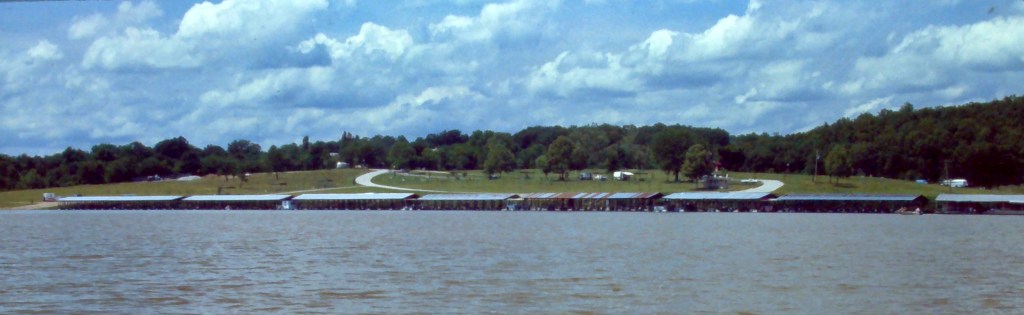
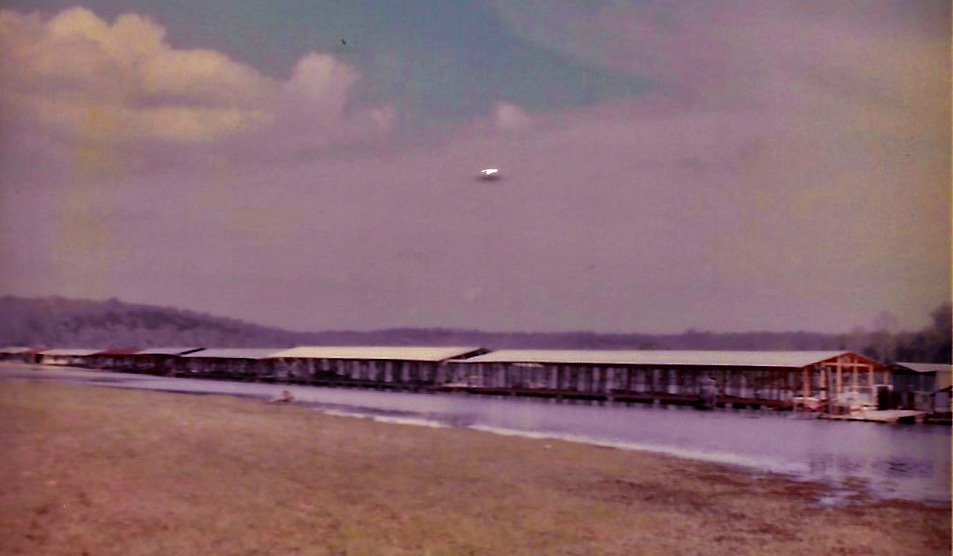
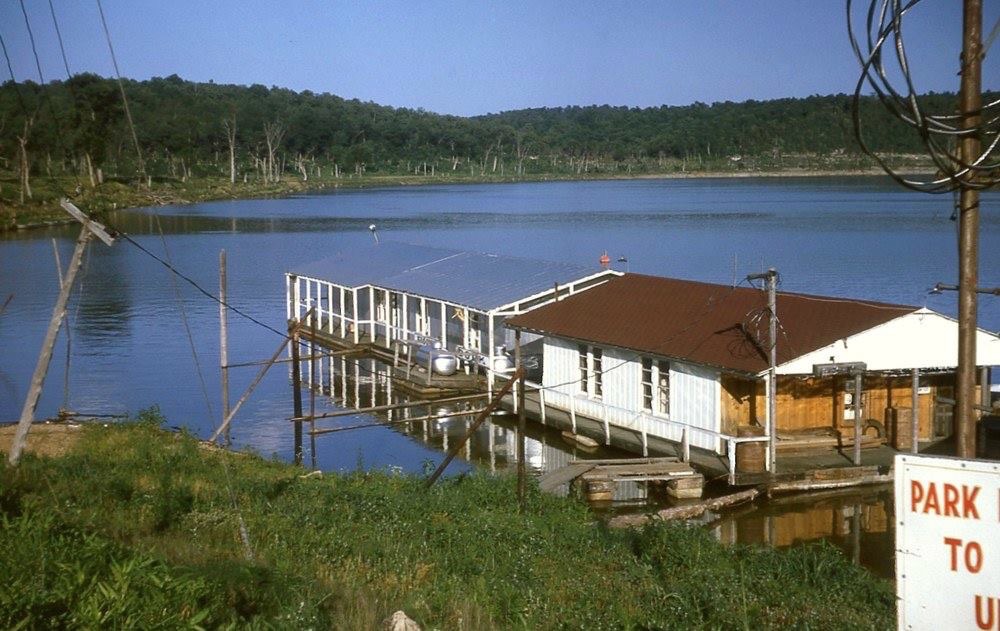
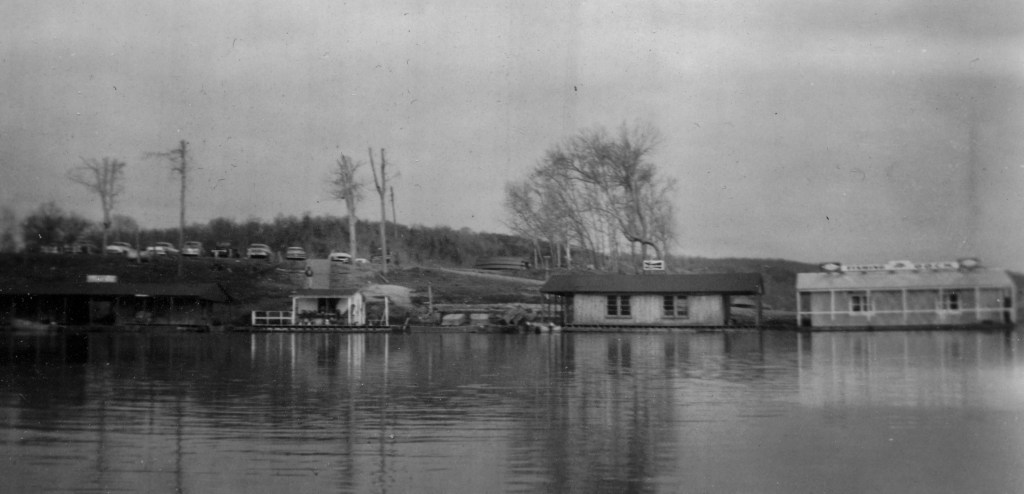
I grew up on Bull Shoals Lake where my parents and Aunt & Uncle owned Beaver Creek Boat Dock. One Sunday afternoon in March, we didn’t have to work because very few fishermen were willing to go out with the high winds and whitecaps. So, my brother, cousins, and I took a box kite and a deep sea reel to the Twin Pond Field overlooking the Rubidon Branch some hundred feet below. We were able to let out almost 200 yards of line in the brisk wind. The box kite was barely visible against the wispy clouds and blue sky. It was so much fun; we didn’t realize it was a foreboding of a major winter storm headed our way.

The next morning, we woke to dense, low-hanging clouds. By afternoon, heavy snow began to fall and continued through the evening. After supper, Dad told us that we would need to “push the docks”. For those unfamiliar with floating boat docks, “pushing” meant we would climb onto the roof of the docks with a 12-foot 2×4 board with a a piece of plywood nailed to the end. The plywood was a rectangle measuring about 12-inches high by 24-inches long. The goal was to balance on the ridgeline of the roof and push the snow drift from the leeward side of the roof into the lake. It was a strenuous, treacherous task to balance on the aluminum roof and avoid slipping into the lake with the snow.

The four of us – my Dad, Uncle, brother, and I began pushing around 6:30 that evening and continued until about 1:00 am. At that time, we owned at least eight boat docks where boats floated underneath the roof with a narrow gangway on each side of the floating dock. If we didn’t push the snow, the weight would submerge the leeward side until the roof collapsed under the load and angle of the supports. Each dock was approximately 100-feet long with ten boats each. So, we pushed all 800-feet of roof taking breaks to warm and rest between each dock. While taking breaks, Dad would tune his small transistor radio to the AM station in Tulsa Oklahoma. After the second round of pushing each dock, Dad announced that “It has stopped snowing in Tulsa; I think the docks can handle it now and we can go home”. Dad somehow knew that weather in the Ozarks came from the southwest.

When the roads were cleared after several days, we returned to school. Most of my classmates talked about how much fun they had playing in the snow. I sat quietly thinking about the night we spent protecting the docks and thanking Jesus that none of us slipped and fell into the icy waters.

The Float Fishing Trip – Part 4

The Roberts Clan in Missouri or The Gunfight at the Critical Fork of the Guest River

“Mom, how did the Roberts family end up in Taney County on Caney Creek?” I asked.  Mom didn’t answer immediately; instead, she looked back at Dad, then at Granny, then back at me.  The look on her face meant that she knew more than she was willing to tell.  The mystery surrounding the Roberts clan in Missouri only increased my curiosity and determination to know everything I could about our ancestry.

Mom sat silently in the boat for a long time after I asked how the Roberts family ended up on Caney Creek in Taney County.  Then, she then began to speak softly and deliberately, “Our family came to Taney County in the late 1800’s from Wise County Virginia.  Mom and Daddy didn’t speak about it in front of us, but my cousins said that there was an awful feud, someone was shot, and our Great-Grandfather Ira moved the entire family along with the Hunsuckers, Jenkins, and Maggards to Missouri.  I know that Uncle Roaten was born in Virginia, but believe my Daddy [Preston Ira] and the other boys were born in Missouri.”  Her voice trailed off and Dad said, “We need to stop talking and catch some fish.” 

So with those brief words, I was left pondering what really happened and would I ever really know.  Years later, I asked Mom to tell me more about our family.  Her knowledge of the family tree was encyclopedic; she could still recall almost everyone’s name and often their birthdays into her 80’s.  But, like Mom, I depended upon my cousins and later, on the internet, to piece together the story of the Roberts’ mysterious move from Virginia to Missouri.  

Some of the story is well documented and consistent; other parts have widely conflicting accounts.  This is my version of the story:

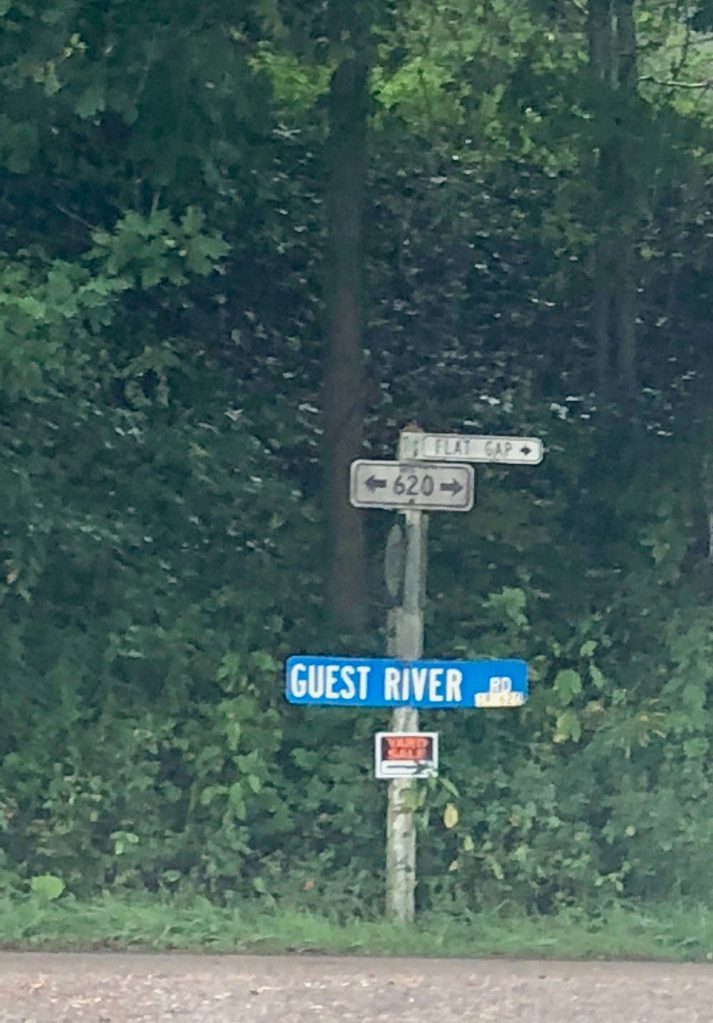
On January 1, 1891, the Roberts clan had gathered at Ira Hampton (Henry) Roberts home on the Critical Fork of the Guest River in Wise County Virginia.  Each New Year’s Day, my great-great grandfather held a “Turkey Shoot” and gave away live turkeys, chickens, and smoked hams as prizes for the best shots.  While the family was gathered under a large apple tree in the front yard, three armed assailants rode in on horseback and opened fire killing Galen Marion Roberts, John Hunsucker, and one other family member.  At this point, the stories diverge; some stories paint the Roberts as blood-thirsty murders who put 26 bullets into the youngest assailant; other stories tell of a family defending itself against a heinous and unwarranted attack.  I suspect the truth lies somewhere in between.  

My cousin Denzel recalls his mother saying that, in the midst of the gunfight, a man in a plaid shirt reached down, picked up a pistol from one of the slain family members, and, standing upright in the gun smoke, shot all three assailants in order, killing one outright.  The man in the plaid shirt then walked to the river bank and hurled the pistol into the middle of the mill pond.  At the time, no one could recollect who was wearing a plaid shirt on that fateful day.  But after Ira passed in 1935, several of the family members seemed to regain their memory and recalled that our great-great grandfather was wearing a plaid shirt that day.  

It was commonly known that Ira was an expert shot having served in the Confederate Army until captured and placed in prisoner of war camps in Kentucky and Ohio.  Ira was arrested for murder and brought before a Board of Inquiry.  After expending a sizable sum of money, the Board of Inquiry refused to press charges.  No one knows if the money was spent on legal fees or bribes.  But, two things were known for certain; Ira Roberts had proven in the Civil War that he was more than willing to take up arms to defend his family and he was also willing to go to extremes to avoid being imprisoned after being held as a prisoner of war by the Union forces.

While facing the Board of Inquiry, Ira sent his entire family to Chadwick, Missouri by train and then by wagon to the Caney Creek basin in Taney County where they established their homesteads.  Since there was no statute of limitations on murder, Ira left Wise County Virginia and a fortune in coal mineral rights as soon as he was released by the Board of Inquiry.  He moved west to secure his future and freedom in Taney County Missouri.

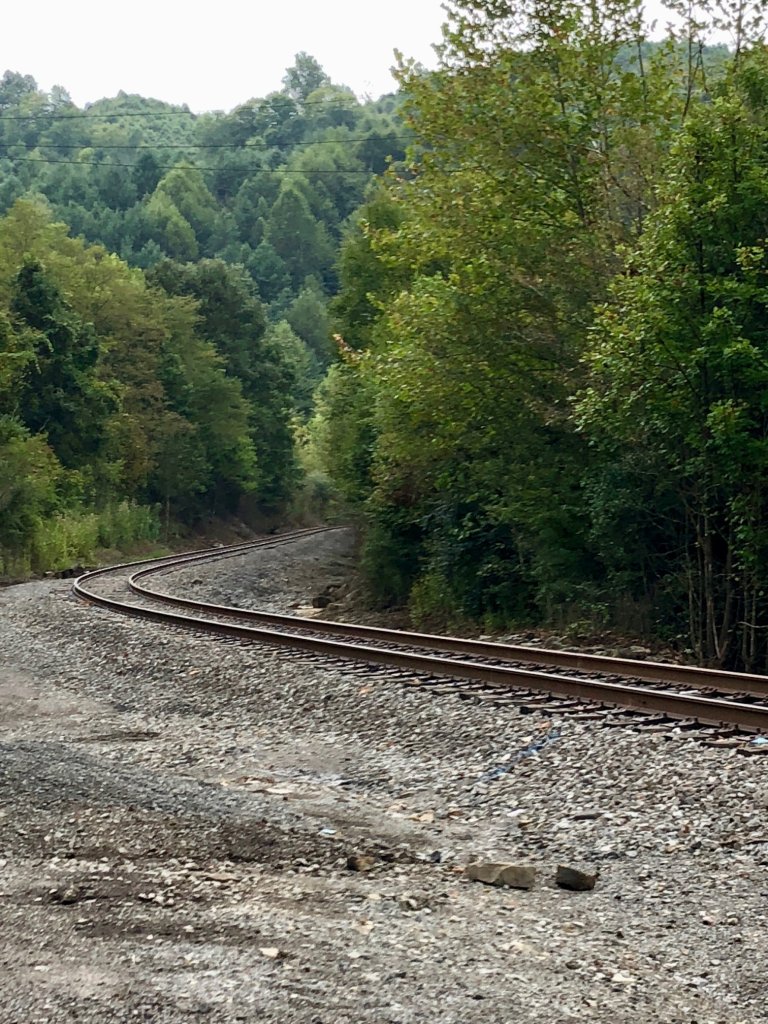
Interestingly, the family hired an attorney in the mid-1930s to go to Wise County Virginia and file a legal brief to recover the lost mineral royalties from the coal mine.  The attorney’s body was found floating face down in the Guest River.  No other attempt has been made at reclaiming our rightful inheritance, but Google maps clearly show a large coal mine and railroad spurs on the Critical Fork of the Guest River where our great-great grandfather Ira’s farm was located. 

Dad picked up his pole and cast into the current at the top of the next shoals catching another smallmouth bass.  “I told you that we need to stop talking and get back to catching fish”.  Throughout their marriage, Dad would tell a story or start an activity anytime Mom seemed to be burdened with bittersweet memories of the past.

#TheFloatFishingTrip  #PresAndNola #DonaldAndRuby

A Tribute to our Buddy Dog

Our beloved Buddy dog passed on Friday, October 3, 2014.  We were grieved beyond words.

We adopted him after he destroyed the carpet in our friends’ daughter’s apartment in Lubbock.  Upon arriving in Longview, he promptly destroyed our carpet.  We eventually forgave him for destroying our carpet . . . and for being a Red Raider.  Years later, when Emily came home from the University of Texas, she brought Buddy a Longhorn collar which he proudly wore even on trips to vet, who was an avid Aggie.

In his early years, we called him by his given name, Spencer, but began calling him Buddy when our new neighbors moved in with their son, Spencer – it was just too confusing.  Emily took a profound liking to Buddy and constantly carried him around the house on her shoulder.  Even today, her room at Justin’s house is adorned with photos of her precious Buddy.

Soon, Buddy and our Lucy graced our house with four wonderful puppies – Trevor, Micki, Chloe, and Trisha.  Only Trisha remains, but the pups were a great joy to us and our friends who adopted two of the four.  I believe these were the first and only puppies born in the home where Pam and our kids were living.

Buddy had the most tender feet of any dog.  He simply refused to get his feet wet on rainy days or mornings when the grass was covered with dew.  We had to carry him to the boat trailer and place him on the dry grass to “do his business”.  When he finished, he rushed to the sidewalk in long bounces to keep his feet as dry as possible.  On the rare occasions that it snowed in Texas, he was simply impossible!

He adored Lucy.  They were constant companions and had to touch one another anytime they slept, often with their heads laying on one another.  They were almost always in the same room in the house.  Late at night, they would occasionally serenade us with howling from the laundry room.  They generally chose to howl when Pam, or I, was out of town leaving the other terrified that a bugler had broken into the house.

Buddy was the most gentle dog I have known.  I never recall him growling or snapping at anything other than a morsel of food.  He is missed, but we feel incredibly blessed in sharing our house and lives with him for over 15 years.

When Justin was small and saw the movie, “All Dogs Go to Heaven”, he asked me, “do all dogs really go to heaven?”  Not wanting to mislead him on religious doctrine or crush his tender spirit, I simply replied, “what does the Bible say?”  He quickly respond, “I don’t know what the Bible says”.  I told him, “The Bible doesn’t say anything about dogs going to heaven; do you know why?  It’s because dogs can’t read!”  “But, since you love your dog and heaven is going to be a wonderful place, I have to believe that God, in His grace, will provide a place for our beloved pets in heaven.  How about you?”  Justin and I hope I am right!

Retirement Tips for Someone who is Hopelessly an Engineer!

The author worked as a chemical engineer in plant operations for 43 years.

TIP #1 – Continue to Write-up Daily

DO:  Since you had a daily logbook write-up for 25-30 years, continue to do so in retirement.  Call it a journal, a diary, or a logbook but write up what you do on a daily basis.

DON’T: Ask your spouse to read and initial the write-up!

TIP #2 – Keep a Datasheet

DO:  Fill out a datasheet daily.  It really doesn’t matter what you data you keep (think about all the non-essential data you were asked to maintain at work).  For starters, enter the day, date, ambient temperature, atmospheric conditions, biometrics such as weight, blood pressure, and pulse rate.  Expand to include exercise regiment, etc.

DON’T:  Keep biometrics on spouse!

TIP #3 – Maintain Production Records

DO:  Maintain production records for your hobby.  It doesn’t matter if you walk, run, bike, golf, or garden.  Keep records of the number of miles walked, number of holes per week of golf, or number of pints of produce from your garden.

DON’T:  Maintain production records on spouse (such as cumulative number of home cooked meals, etc.)!

TIP #4 – Monitor your Email Account

DO:  Read your emails daily.  Keep essential emails (these will be few and far between in retirement) and delete the rest UNREAD.

DON’T:  Feel the need to read and definitely don’t respond to all emails.

TIP #5 – Accept your Role

DO:  Think deeply about current events.  Work diligently to expand your  circle.  Seek out those with different opinions or perspectives.  Be quick to listen AND SLOW TO SPEAK.  Remember, no one is paid to value your opinion any longer.

DON’T:  Feel the need to voice your opinion on every subject.  Retiring after 40+ years on the job does not make you an expert on contagious diseases or race relations or international affairs.

Good Luck and Happy Retirement! 

Ozark Mountain Green Beans

Ozark Mountain Green Beans

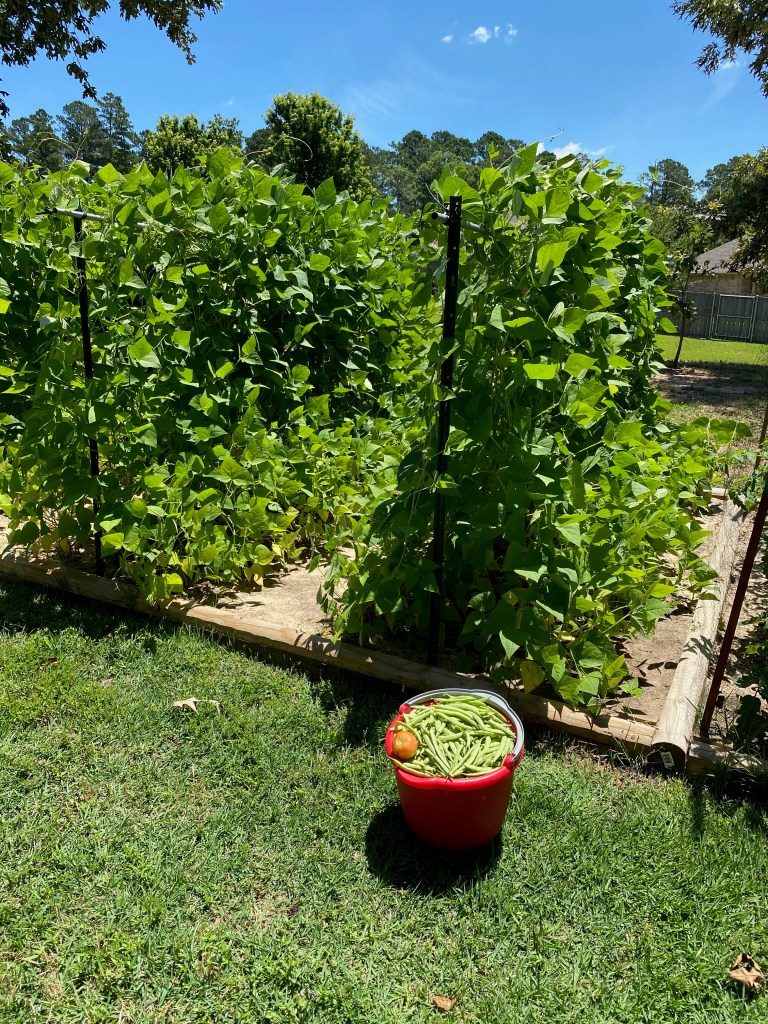
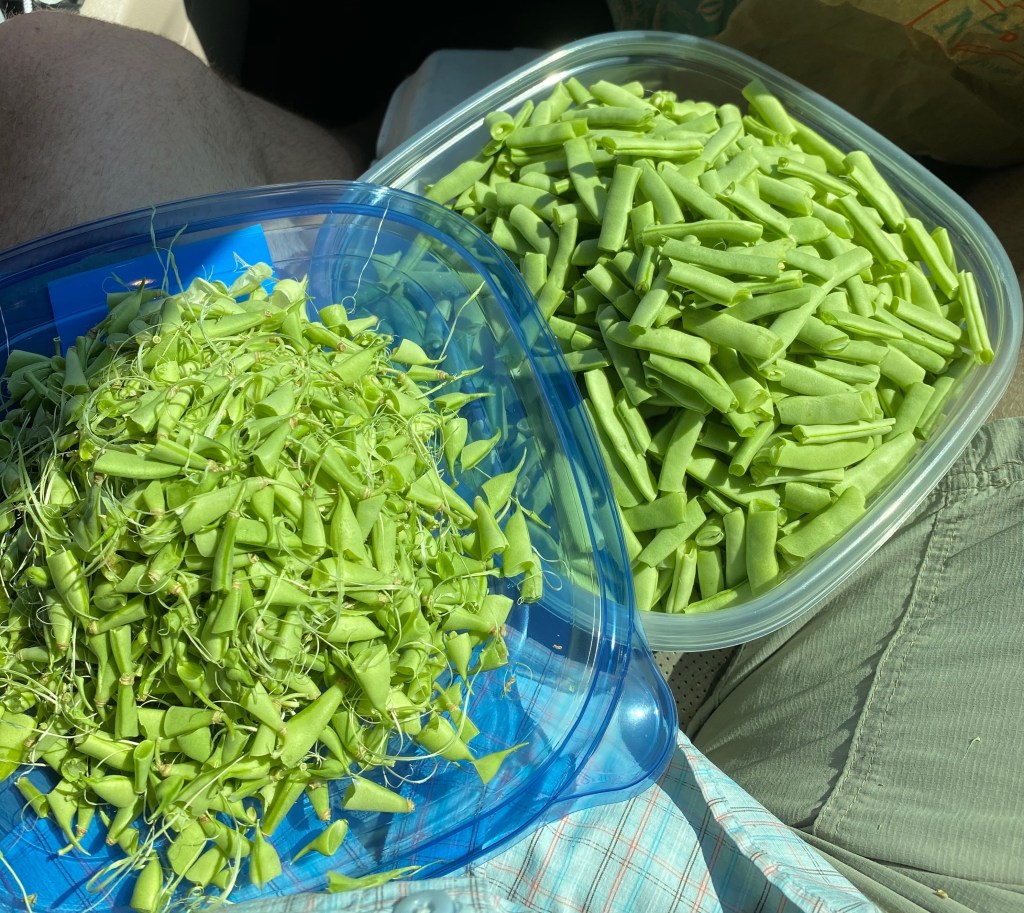
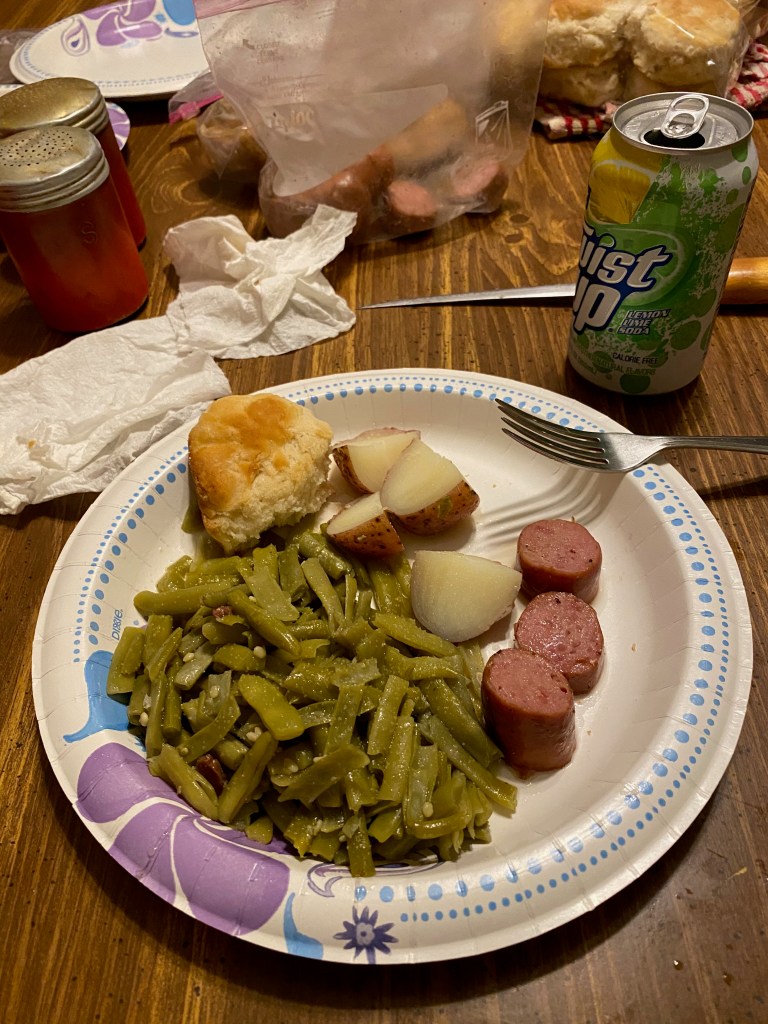
Our family has raised heirloom, little white, half-runner green beans since the 1800’s.  First in the Appalachian Mountains of Wise County Virginia, later in the Ozark Mountains of Taney County Missouri, and finally in Gregg County Texas.

Here is how we prepare and cook a “mess” of green beans in the Ozark Mountain tradition.

Preparing the Green Beans

  1. Pick at least two quarts of fresh green beans.
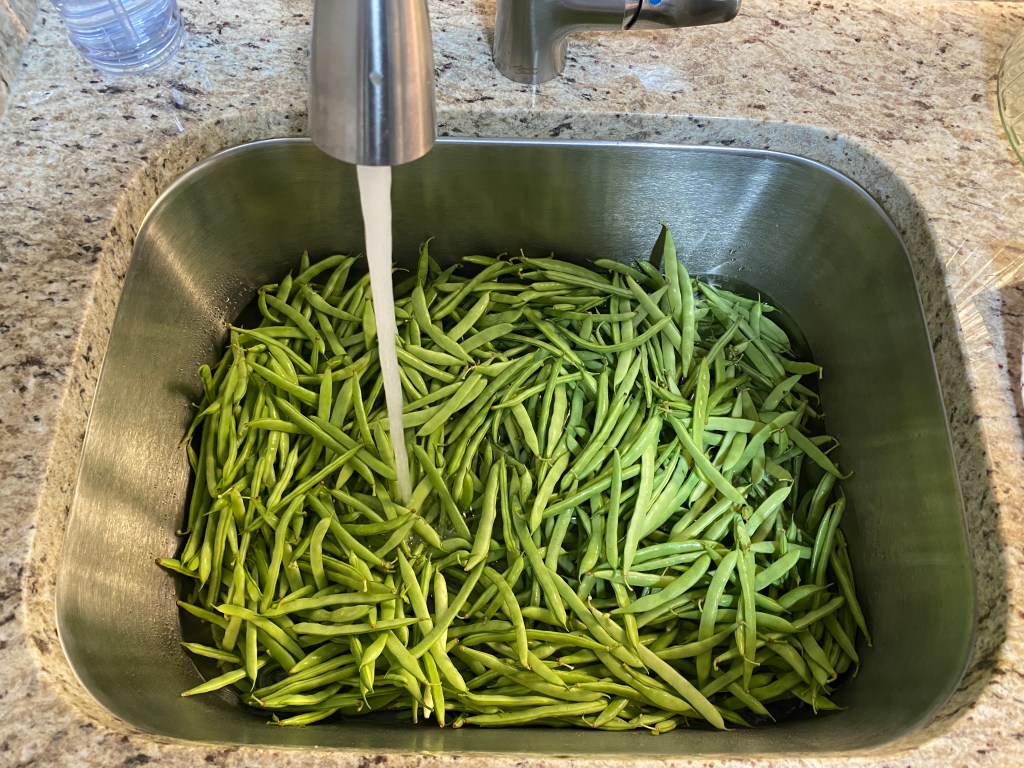
  2. Wash the green beans to remove grit from the garden.
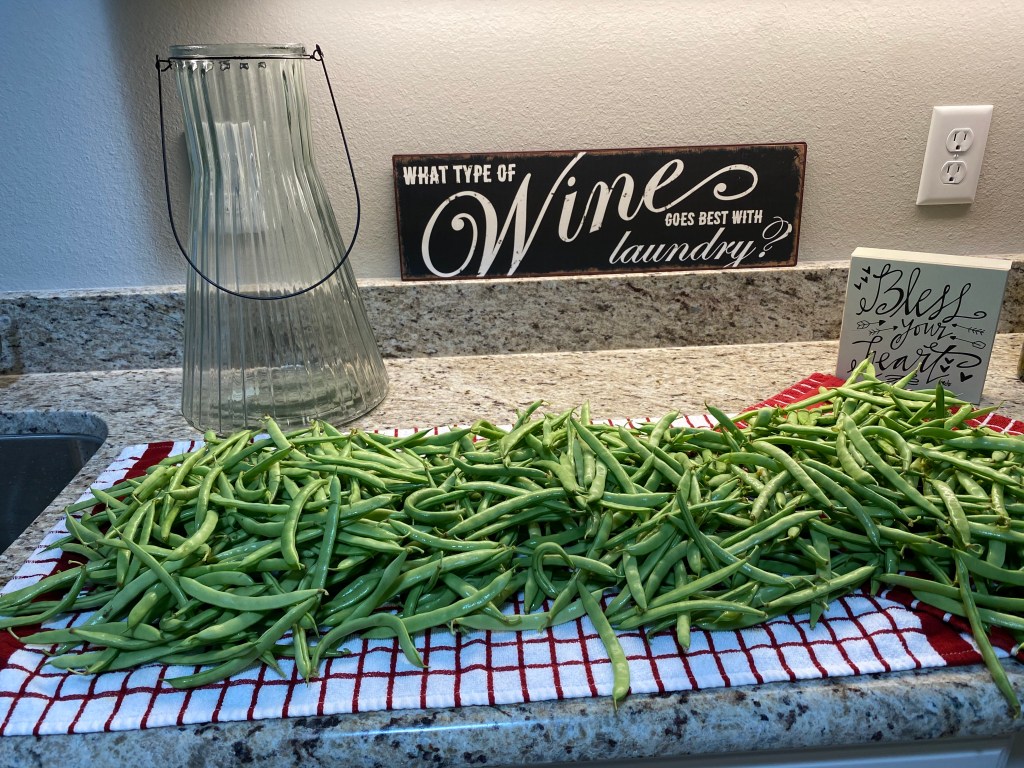
  3. Drip  dry on a kitchen towel
  4. Put green beans in a brown paper grocery bag
  5. Place in the refrigerator to cool (cold beans are easier to snap)
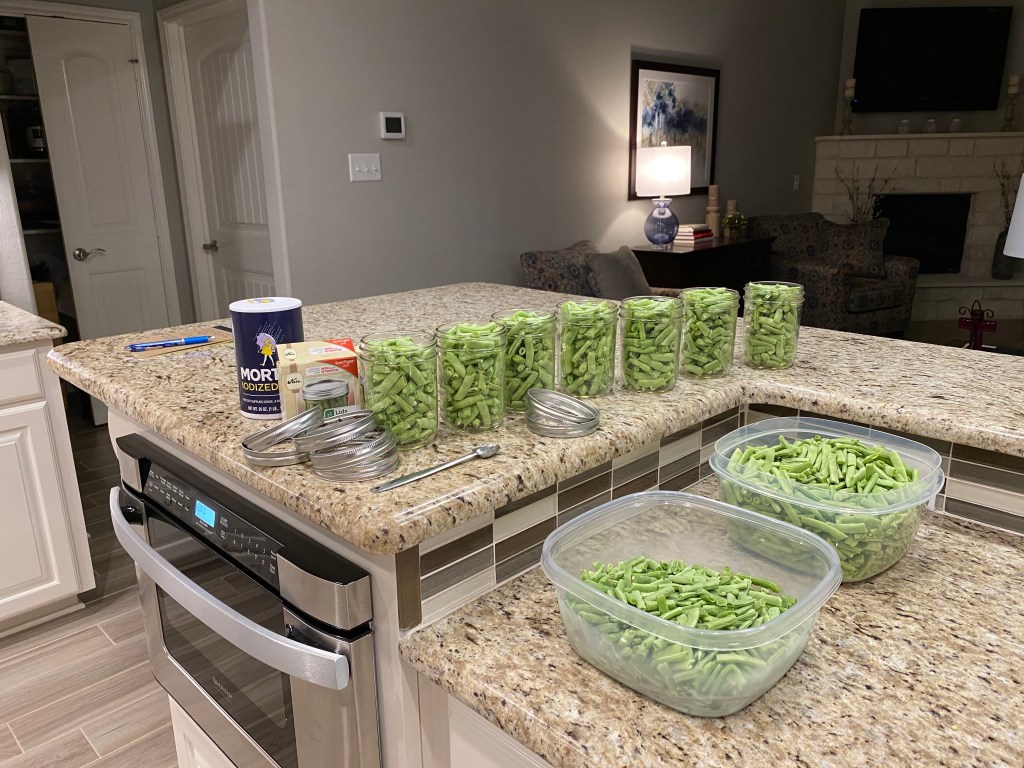
  6. After cooling, snap both ends of the green beans and remove any strings
  7. Snap bean pods in approximately one-inch lengths

Cooking the Green Beans

  1. Cut two slices of bacon into two inch pieces
  2. Fry bacon in a 3-quart sauce pan until done, but not crisp
  3. Add about one inch of water (1 cup) to the sauce pan and bacon
  4. Stir to get the bacon lose from the bottom of the pan
  5. The intent is to steam, not boil, the green beans)
  6. Add snapped green beans (3 pints) into pan
  7. Add salt and garlic salt to taste (add diced onion if you like)
  8. Stir the green beans to get them coated with the water and bacon grease
  9. Add four to six new potatoes on top
  10. Add one tablespoon of butter
  11. Bring the pan to a boil
  12. Cover and reduce heat; simmer until the new potatoes are cooked.
  13. Enjoy!

Brad Wyatt 6/1/2020

Adapting to Alzheimer’s – Herding Cattle, Fighting Fires, and Counting Ballots

Adapting to Alzheimer’s – “Herding Cattle, Fighting Fires, and Counting Ballots”

I am neither a healthcare professional nor an expert on Alzheimer’s care giving.  But, I thought it might be helpful to share some adaptations through a series of short stories based our experiences while caring for my Dad and my Mother-in-Law on this long journey known as Alzheimer’s.

My mother loved serving as an Election Judge in their local precinct.  She looked forward toward working the primary elections in August and the general election in November with Beulah and Wilma.  She loved seeing friends and relatives coming to the polling place and meeting new neighbors in the community.  She had a keen ability to remember names, faces, and relationships, which made her an effective judge.  For many years, Dad would get up very early in the morning with Mom, eat a quick breakfast, and drive her to the polling place before it opened.  Around noon, he would would come back to check on Mom and cast his ballot.  Then, shortly after the polls closed, he would arrive to drive Mom and the ballot box to the County Courthouse.

I don’t have the actual dates, but I believe Mom started serving as an election judge in the 1980s and continued for more than two decades.  In the early 2000’s, Dad’s dementia became more pronounced and Mom began to worry that she couldn’t leave Dad alone all day.  He was fully functional, but the medications sometimes made it difficult for Dad to distinguish between his memories and the current reality.  She would tell me during our weekly phone calls that she probably didn’t need to “work the elections” again this year.  I would ask, “Why don’t I check my calendar since I’m about due for a trip to Missouri.”  Amazingly, my calendar would open up.  I would take vacation, drive to Missouri on a Monday afternoon, Mom would fill me in on the instructions for the next day, then we would get in bed since it would be an early start for the elections.

Throughout the evening, Mom would remind Dad that tomorrow was Election Day, she would be serving as an election judge, and their son, Brad, would be staying with him.  She also told him that she would be leaving early, but he could sleep in since Brad would be here when he woke up.

The next morning, things went like clockwork; Mom got up early, I heard her in the kitchen outside my bedroom door, but quickly fell back to sleep.  At 7:00 am, my alarm went off and I roused out of bed.  I was pleased that Dad was still asleep so I took a quick shower, got dressed for the day, and began to cook breakfast.  Dad woke up around 8:30; I reminded him that Mom was working the elections and I would be taking care of him.  He was still able to dress himself if Mom laid out his clothes for the day.  He got dressed, went into the bathroom to brush his teeth and shave, then came into the kitchen for breakfast.  I asked if he would like some coffee while I finished cooking.  We had oatmeal, buttered toast, fried eggs, and bacon.  After eating, I was to make certain he took his medications, which Mom had carefully placed in a row on a paper towel on the kitchen table.

At this point, things began to unwind.  I asked Dad if he would take his medications and pointed to the pills lined up on the paper towel.  He stubbornly refused; I pressed, he dug in.  Trying to out maneuver him, I  got second paper towel and placed my medications in a row.  I told, “Look Dad, I’m going to take my medications.”  I picked up the first pill, put it in my mouth, took a sip of water, and swallowed.  It was at this point that things really unravelled!  “You ruined it”, he said, “You’ve messed up the ballots and ruined the whole election!”  It was then I realized that Dad didn’t see pills in a row on a paper towel; he saw election ballots lined up in a row ready to be counted.  I reassured him that Mom would be back soon and she would know how to straighten it out.  After many reassurances, I was eventually able to get him to leave the kitchen and go into the living room to his recliner until Mom returned to count the “ballots”. 

When Dad dozed off, I eased outside to do some yard work that Mom had mentioned, if we had time.  While I was outside, Dad woke up from his nap and came outside with his Norelco electric razor case, his key ring, and a green coffee cup.  He went to his Chevy pickup first, unlocked the door with his key ring and climbed inside.  I watched intently as he fumbled with his keys trying to get one to fit in the ignition (we had previously removed the ignition keys from his key ring when he decided to drive himself “home”, but that is another story).  When he was unable to start his truck, he climbed out and tried to unlock my pickup.  Being unsuccessful, he moved to a golf cart that my cousin had brought over in advance of deer season.  He looked at me and said, “We’ve got to get out of here!  Everything is going to burn up!  You’ve got to help me start one of these cars and get out of here!  There’s a forest fire coming our way and everything is going to burn up!”

I told Dad, “I can’t help you; I don’t have a key to start the cars”.  “Well then, you’ve got to push me!”, he said.  I push hard against the golf cart without success.  “I can’t push it Dad; we’ve got to do something else!”  At this time, I went to the well house and got a sweep rake and began  raking leaves away from the house.  “What are you doing?”, Dad asked.  “Raking a fire line” was my reply and our conversation went back and forth.  “It won’t do any good; everything is going to burn up!”  “Well, we’ve got to try!”  Finally, Dad went to the well house, attached a garden hose to the facet and began spraying water against the house.  At this point, I knew I had him.  He had gone from an irrational fear of a forest fire that occurred in the early 1950’s to a rational response toward fighting a fire.  As he sprayed water, I stopped raking and asked Dad, “Do you see any fire or smell any smoke?”  “No”, he replied.  “I wonder if they we able to put the fire out?  Why don’t we go and check?”  I went to my Ridgeline, helped him into the passenger seat, and drove him down the County Road.  “I don’t see or smell any smoke; do you?”  He spotted one small cloud in the clear, blue November sky.  “Is that a fog or a smoke?” he asked.  “I think it is a fog” I replied, “I think they were able to put the fire out!”  He seemed satisfied.  While we were out, I distracted him into painting some fenceposts with posted purple and he completely forgot about the forest fire.

Shortly after lunch, we went to polling place.  Mom helped Dad cast his ballot.  She pecked him on the check with a kiss and told him that she would be home as soon as the election was over.  I asked about the medication “ballots”; she said we would count them tomorrow. I was relieved that the rest of the day and evening were uneventful.

The next morning, I woke to a horrible racket in the kitchen!  “Haw, haw!  Get in that pen!”  When I cracked open the bedroom door, I saw Dad waving his arms and herding imaginary cows around the kitchen table.  Mom always said that you have to be nimble of mind and foot when watching an Alzheimer patient.  I opened the bedroom door further and asked, “Do you want to put those cows in this corral?”  “Yes I do!” he hollered.  I slipped around the opposite side of the kitchen table and followed Dad’s lead of hollering, waving my arms, and herding the imaginary cows.  Soon, we converged on the bedroom door.  “Did we get them all in the corral?”, I asked.  When he said yes, I closed the bedroom door which was serving as a gate to the corral.  “Whew”, I exhaled and looked at Dad, “It’s only 8:00 o’clock and the truck won’t be here for another hour to pick up the cattle; why don’t we get a cup of coffee and go sit in the living room until the truck arrives”.  Dad agreed.  As he sat down in the recliner, the imaginary cattle disappeared in his mind as quickly as they appeared.

As I look back on those years, I am so glad that I took the time to drive to Missouri and let Mom “work the elections” while Dad and I herded cattle, fought forest fires, and counted ballots.  I am also glad that Mom had advised me to be nimble of mind and foot when caring for an Alzheimer’s patient!

Blessings to the caregivers and those on this journey.

#Alzheimer’s #caregiver #AdaptingToAlzheimer’s

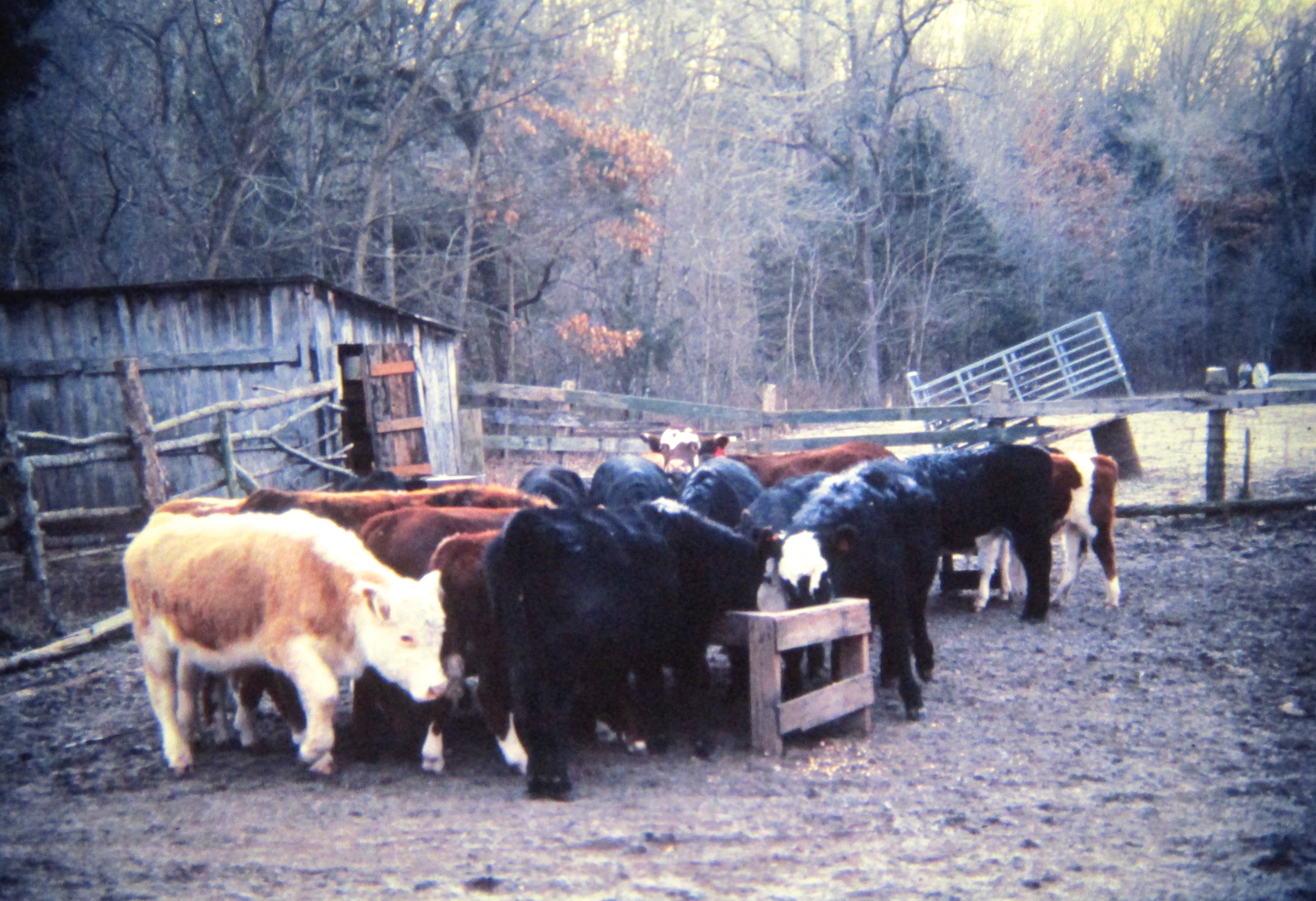
Dad’s cattle lot and corral
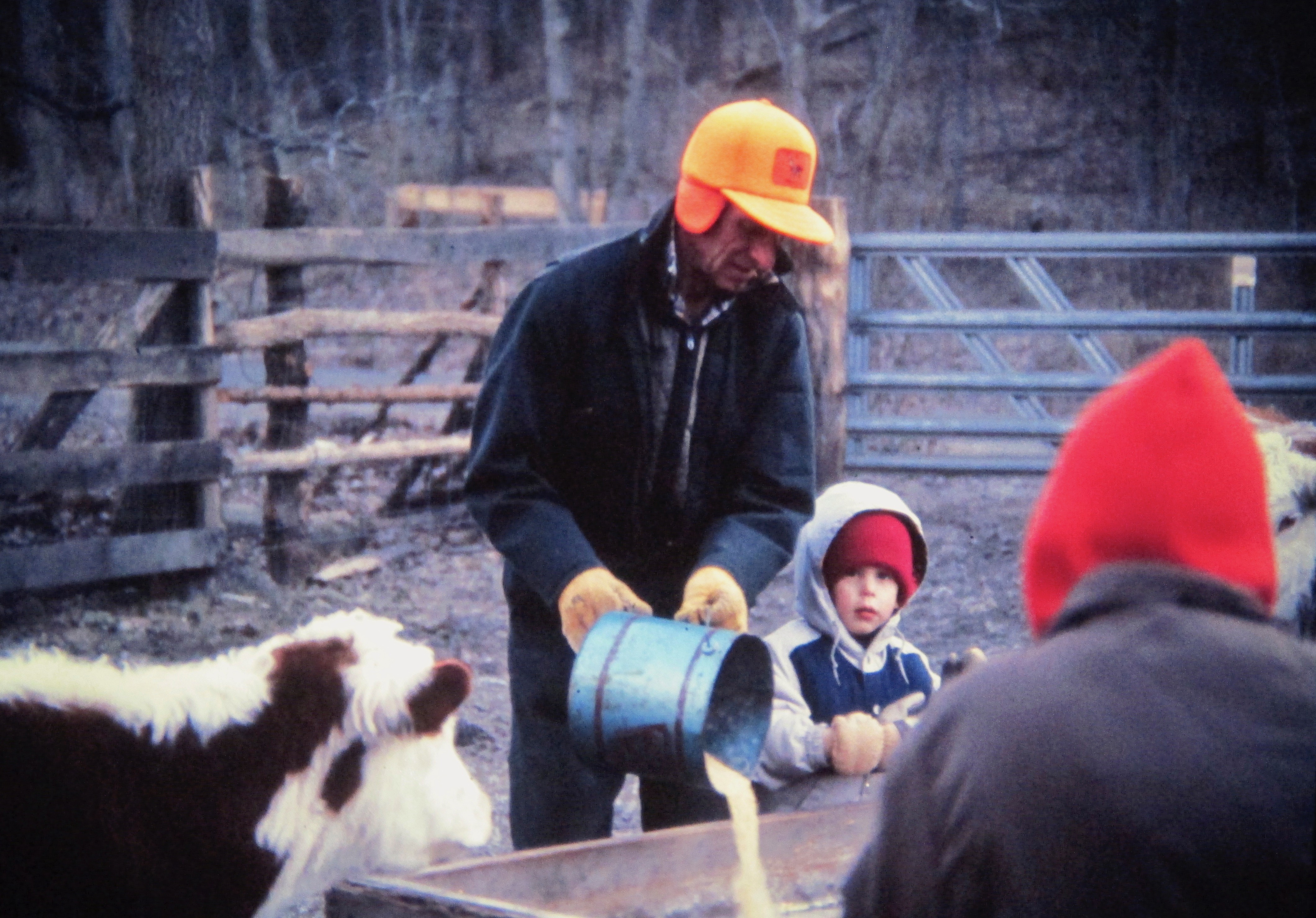
Dad feeding cattle with his grandson and Mom
A calf in squeeze chute

Adapting to Alzheimer’s – “The Long Drive”

Adapting to Alzheimer’s – “The Long Drive”

I am neither a healthcare professional nor an expert on Alzheimer’s care giving.  But, I thought it might be helpful to someone for me to share our adaptations through a series of short stories based our experiences while caring for my Dad and my Mother-in-Law on this long journey known as Alzheimer’s.

We first became aware of Dad’s dementia while playing the Phase 10 card game.  We spent many holidays around the kitchen table competing in this game.  Dad always sat at the head of the table, Mom to his left, Emily to Grandma’s left, then Justin, Pam, myself, back to Dad.  Grandma and Emily played together “as a team”. I’m not saying they cheated, but Grandma routinely discarded the exact card Emily needed. Justin even once accused Emily of signaling the card she needed by the number of fingers she extended.  Regardless of the alleged cheating, Dad had a keen ability to read people and remember cards.  He seldom lost unless multiple players aligned against him.

But, all that began to change in the late 1990s.  Dad was no longer a consistent winner.  At times, he wouldn’t even be working on the current Phase.  When we recognized the problem, I would keep the Phase 10 card between me and Dad and would frequently ask which Phase we were on and repeat it to him.  In later years, I would hold my finger on the Phase and help Dad with his cards, but the end result of this strategy was we both lost.  I could look at his cards and plot a strategy, but never had his gift to read people or remember previously played cards.

On September 11, 2000, Mom and Dad’s first great-grandson was born into this world.  Earlier that year, they had attended Justin’s high school graduation, but Mom told me afterward that would be their last trip to Texas.  I didn’t know at the time, but Dad couldn’t remember the roads well enough to drive and Mom couldn’t stay awake long enough to drive or guide Dad. 

I knew that they desperately wanted to see their great-grandson, but were physically unable to drive themselves from Southwest Missouri to Chicago.  And, Mom and Dad weren’t the kind of people who would want to be a burden to others and definitely wouldn’t ask someone else to drive them. So, I called Mom in late September and told her that I had a “hankering to drive to Chicago” and wondered if they would be willing to ride along “to keep me company”, that is, if it wouldn’t be too much of an inconvenience for them.  Mom gladly accepted my invitation and we agreed to drive to Chicago in October.

Pam graciously suggested that I drive her Lincoln Navigator rather than my Ford Ranger pickup or Mom and Dad’s high mileage Chevy.  So, I drove to Southwest Missouri on a Thursday evening, spent the night with Mom and Dad at the farmhouse, and wondered how they would handle the journey.  At this point in Dad’s dementia, he was fully functional, but had lost most of his short-term memory and definitely couldn’t be hurried.  So, we woke well after sunrise, ate a leisurely breakfast, watched morning news on the local TV station, and followed their normal morning routine.

Eventually, we loaded the car and set off on the 12-hour trip to Chicago.  I drove, Dad rode in the front passenger seat, and Mom sat in the captain’s chair immediately behind me where she could keep a close eye on Dad.  At first, Dad did extremely well; he and Mom routinely drove these roads to the grocery store in Forsyth and the familiarity calmed Dad.  I drove faster than Mom, but the visibility in the Navigator gave Dad, and Mom, plenty of things to see so they didn’t notice the speed.  As we drove past the grocery store and headed to Springfield, Dad looked perplexed.  I told him, “Dad, we’re headed to Chicago to see your new great-grandson!”  To which, he replied, “That’s right!”

When we reached Springfield, Mom and Dad would normally take the exit to a doctor’s appointment and stop by to see Mom’s brother or Dad’s sister.  This time, we drove through town without stopping.  I reminded Dad again, “We’re headed to Chicago to see your new great-grandson!”  He again responded with, “That’s right!” and appeared to relax.

On the north side of Springfield, I turned east on Interstate 44 toward St. Louis rather than north on Missouri 13 toward Kansas City, where Mom and Dad in times past drove to the Veteran’s Hospital and stayed with Mom’s sister.  It was obvious that this new road perplexed Dad and he just couldn’t seem to grasp why I was driving down the wrong road.  Sensing that Dad was getting anxious, Mom asked Dad if he would like a sip of water.  He focused on the unfamiliar road and didn’t answer.  Knowing he needed to stay hydrated and wanting to distract him, she stretch to the front seat and pushed a sip cup with straw in front of Dad.  “Take a drink” she said in a soft voice.  He responded by drinking deeply from the cup.

“Look at those dairy cows Don” she said when he had swallowed.  “I’m glad I don’t have to milk those cows; how about you?”  “Me too” he said and starred out the side window watching the dairy barn and farmland rushing by.  Soon, he focused back on this new road and again began showing signs of being perplexed and started getting anxious.  I softly said, “Dad, we’re headed to Chicago to see your new great-grandson!”  To which, he replied, “That’s right!” and almost immediately sat back in the seat and relaxed.

Mom had often reminded me that when Dad repeats the same question over and over again, it is brand new to him each time.  I quickly realized that Dad could retain where we were going for  little more than a minute.  Fortunately, the States of Missouri and Illinois placed markers each mile to remind me to tell Dad of the purpose of our trip.  So, for the next 545 mile markers, I would look over to Dad and say, “Dad, we’re going to Chicago to see your new great-grandson!”  And for 545 times, Dad would reply, “That’s right!” and momentarily settle back into his seat.

Upon arriving at Chicago, Mom and Dad were able to see and hold their first great-grandson.  We had wonderful weekend with my brother’s family, saw trout at the Root River steelhead facility, ate a delightful dinner beside the Racine harbor, and learned the importance of reassuring those with dementia where we were going along the way.  

Blessings to the caregivers and those on this journey.

#Alzheimer’s #caregiver #AdaptingToAlzheimer’s

Mom and Dad with their first great-grandson born on September 11, 2000

Adapting to Alzheimer’s – Puppy Dogs and Milking Cows

Adapting to Alzheimer’s – “Puppy Dogs and Milking Cows”

I am neither a healthcare professional nor an expert on Alzheimer’s care giving.  But, I thought it might be helpful to others for me to share our adaptations through a series of short stories based our experiences while caring for my Dad and my Mother-in-Law on this long journey known as Alzheimer’s.

One of the challenges of being an Alzheimer’s caregiver is living “in the moment”.  I was shocked by how much of our everyday conversation is either focused on the past, “What did you have for breakfast?” or on the future, “What’s for dinner?”  With no short-term memory, Alzheimer’s patients cannot engage in either conversation; they exist only in the moment or in a fleeting memory from the distant past.

When my mother-in-law began struggling with short-term memory, we found it increasingly difficult to engage her in the family conversation.  I knew there had to be a way to involve her in the activities, but it was so difficult to stay “in the moment” since so much of our lives are intertwined with past, present, and future.  Eventually, I observed that Pat would become totally engaged in any action outside their sunroom windows – a stray cat, a marauding raccoon, or a bird on the feeder; all captivated her attention.  But, what could we do to engage Pat when there wasn’t a critter outside the window?

On one visit to their home, I zoned out of the conversation and began surfing the internet on my iPad looking at miniature, dapple, dachshund puppies that were for sale.  As I scrolled through the images of the puppies, it occurred to me that Pat might also like to see these pictures.  So, I pulled a chair up next to her chair and asked, “Would you like to look at these puppies?”  Much to my delight, she was mesmerized by the images.  She laughed, she counted puppies, and she often commented, “Look at that one!”  From that point forward, we spent many visits looking at the images of dachshund puppies.  I think the puppies particularly appealed to Pat because she had a dachshund named Gretchen, which she adored.  I think somewhere in the recesses of her remaining memory, she could still feel the love, warmth, and security that she had with her faithful dachshund companion.

Although I could always turn to the images of the puppies to engage Pat in the conversation, I also wanted to learn as much as I could about her childhood while some memories still remained.  I would start by asking, “Growing up, did you have sisters or brothers?”  She would respond, “Yes, I had an older sister, Betty Jean, who passed away as an infant, then me, Patricia Louise, my sisters Elizabeth Ann and Margaret Sue, and my brothers Gerald Minor, Eddie Ray, and Ronnie Earl.”  In later years, I would have to help her with the names.

I would delve deeper into her family asking, “What was it like growing up in Arkansas?”  Pat almost always mentioned, “My mother was a wonderful cook.  We canned green beans, tomatoes, corn, and pickles from the garden.  Mother made flour biscuits for breakfast and cornbread for supper.  We had fresh milk, cream, and butter which we made in a stone churn.  My Daddy liked to drink buttermilk with cornbread for supper.”  If Pat seemed particularly cognizant, I would ask, “Where did you get your milk and butter?”  She would immediately respond, “We lived on a farm.  Elizabeth and I would walk to the back of the pasture and the cows would line up and walk to the barn to be milked.”

Later on, I found a video of an English lady milking a Jersey cow.  I would show the video to Pat, which she would watch with fascination.  She would softly tell me that she milked cows as a child.  When I was in a mischievous mood, I would suggest, “Let’s get a cow and start milking again!”  Pat was quick to say, “No way, I am not milking anymore cows!”

Pat’s memories faded much faster than we could imagine.  In hindsight, I cherish those moments setting by her side and looking at pupping dogs and talking about milking cows.  I wish I had asked more about her cow, Colie, and asked if my wife, Pamela Jean, was named in memory of her older sister who died as an infant, and learned more about her childhood in Van Buren Arkansas.

Blessings to the caregivers and those on this journey.

#Alzheimer’s #caregiver #AdaptingToAlzheimer’s

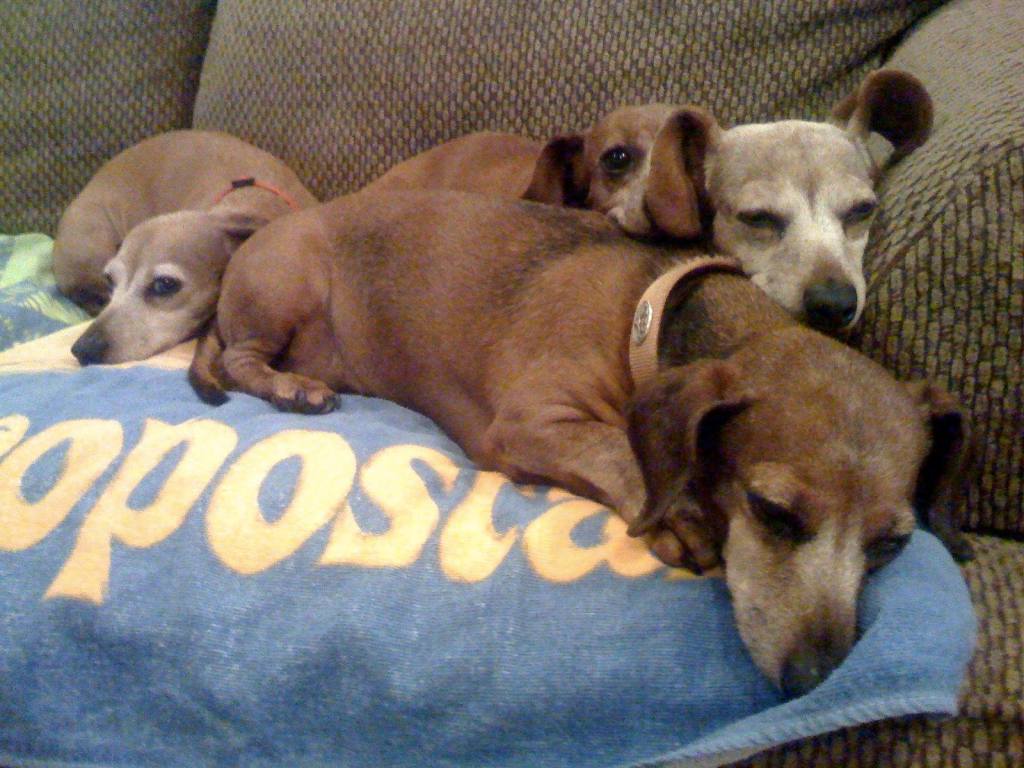
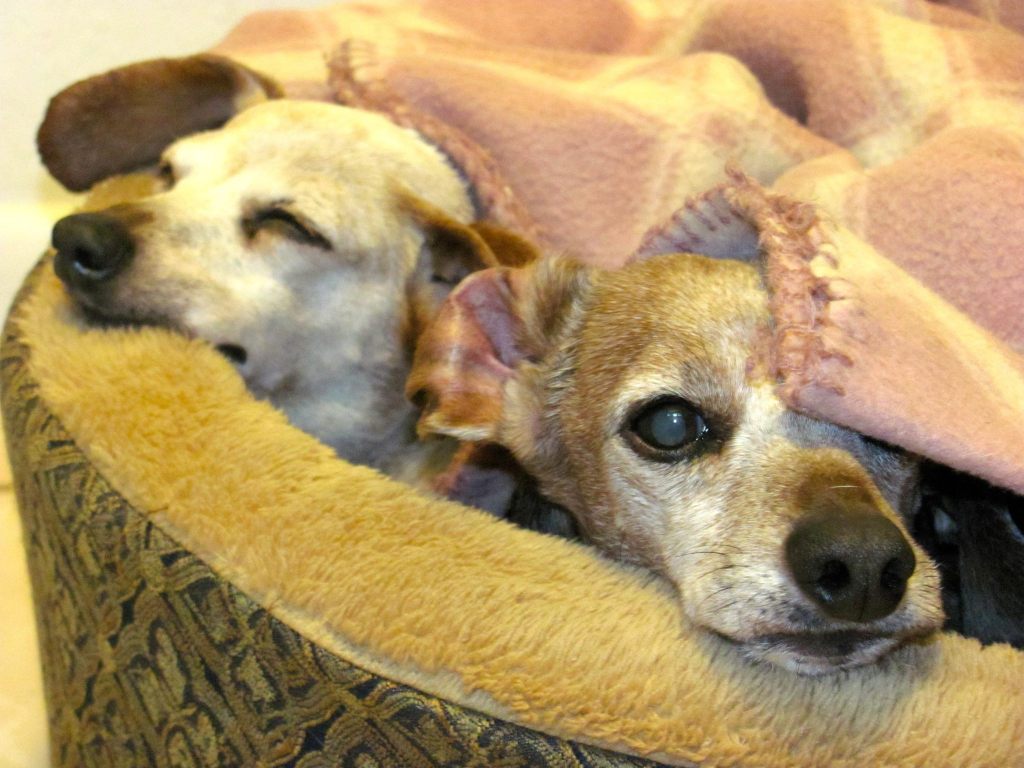
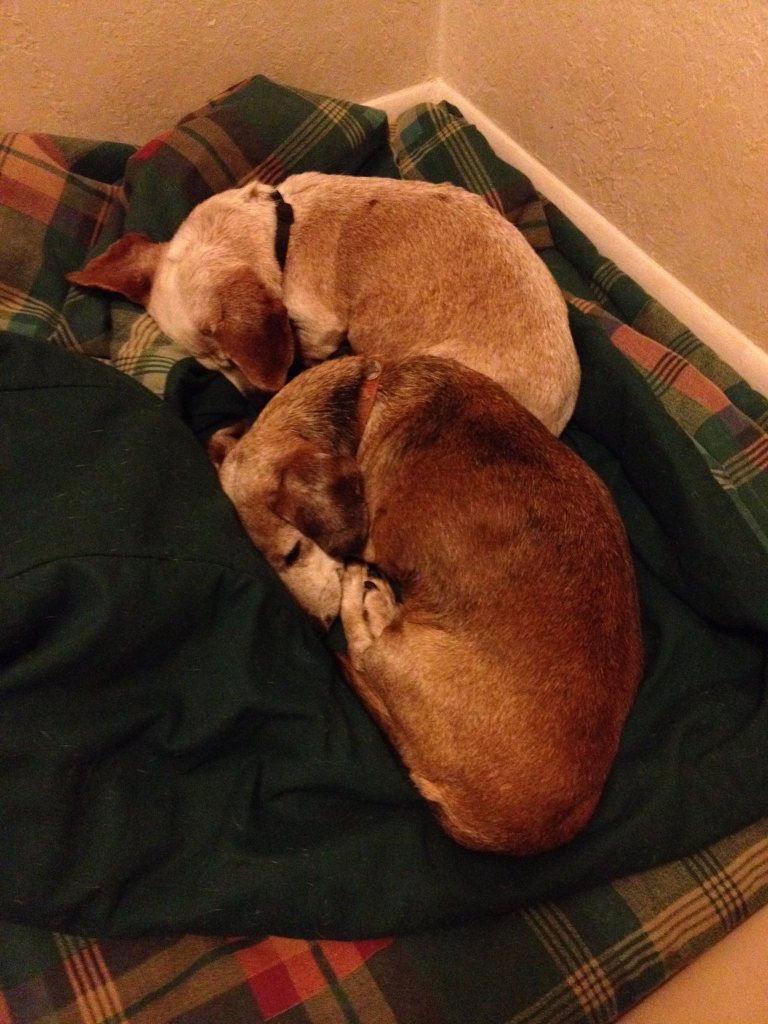
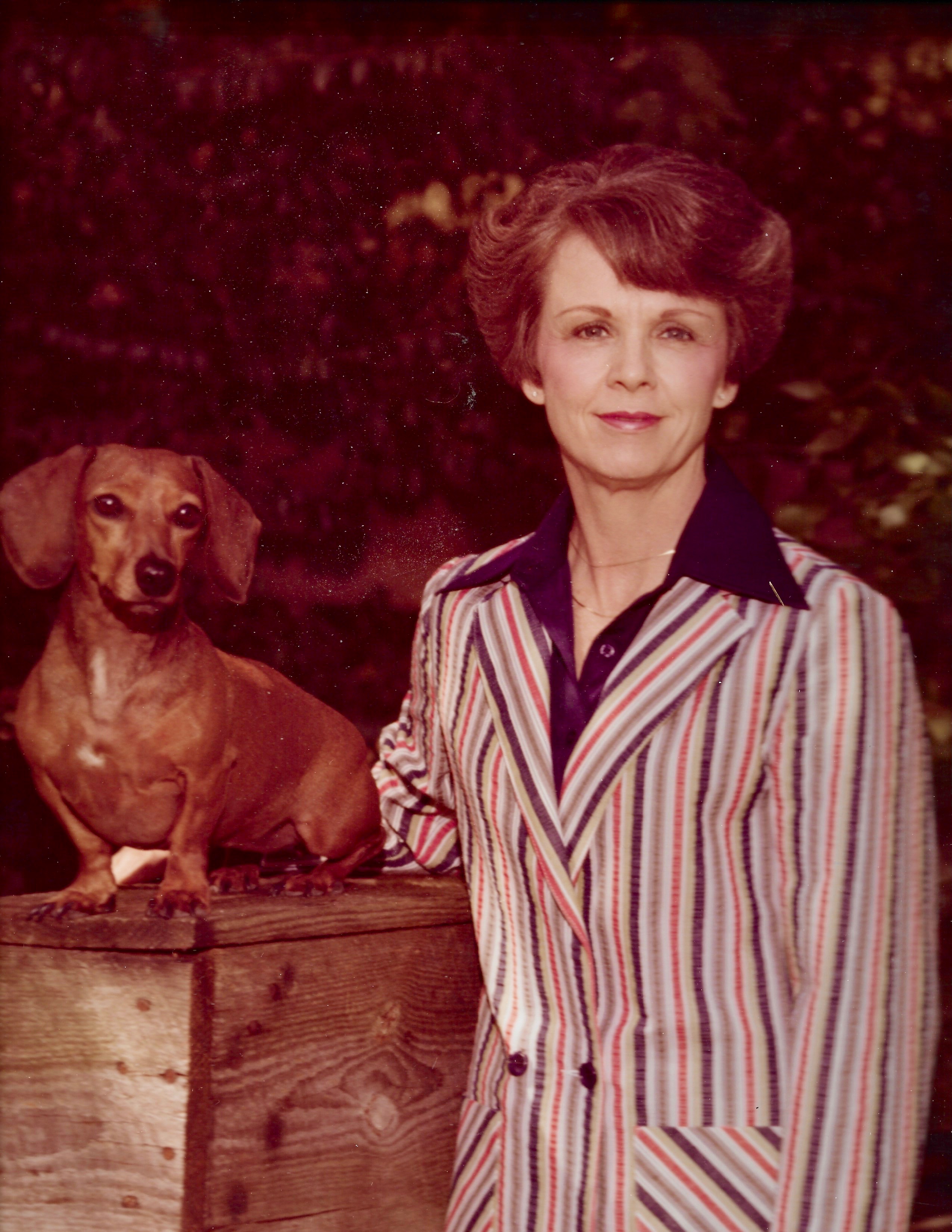
My mother-in-law with her beloved Gretchen